
Let me guess.
You've made financial resolutions before.
"This year I'll save more."
"This year I'll stop wasting money."
"This year I'll finally get my finances under control."
And by February? Those promises are forgotten, buried under a pile of impulse purchases and takeaway receipts.
You're not alone.
Research shows that 88% of New Year resolutions fail. Financial goals are among the most commonly broken.
But here's what's different about 2026:
You're not going to rely on willpower alone.
You're going to use a system that's been proven over 120 years to transform how people think about, track, and spend money.
It's called Kakeibo. And it's about to change everything.
Why Your Previous Money Resolutions Failed (It's Not What You Think)
Before we fix the problem, let's understand why traditional approaches don't work.
The Vague Goal Trap
"Save more money" isn't a goal. It's a wish.
Without specifics—how much, by when, from where—your brain has nothing concrete to work toward. Vague intentions create vague results.
The Automation Illusion
Here's an uncomfortable truth about budgeting apps:
When everything is automated, you stop paying attention.
Sure, your bank app might categorize your spending automatically. But did that change your behaviour? Did knowing you spent £347 on "Dining" last month actually make you order less takeaway?
Probably not.
Because awareness without intention doesn't create change.
The January Sprint Problem
Most people attack January with unsustainable intensity.
Extreme restrictions. Zero fun spending. Financial austerity.
By week three, you're exhausted and resentful. One slip becomes "I've already failed, might as well give up."
Kakeibo solves all three problems.
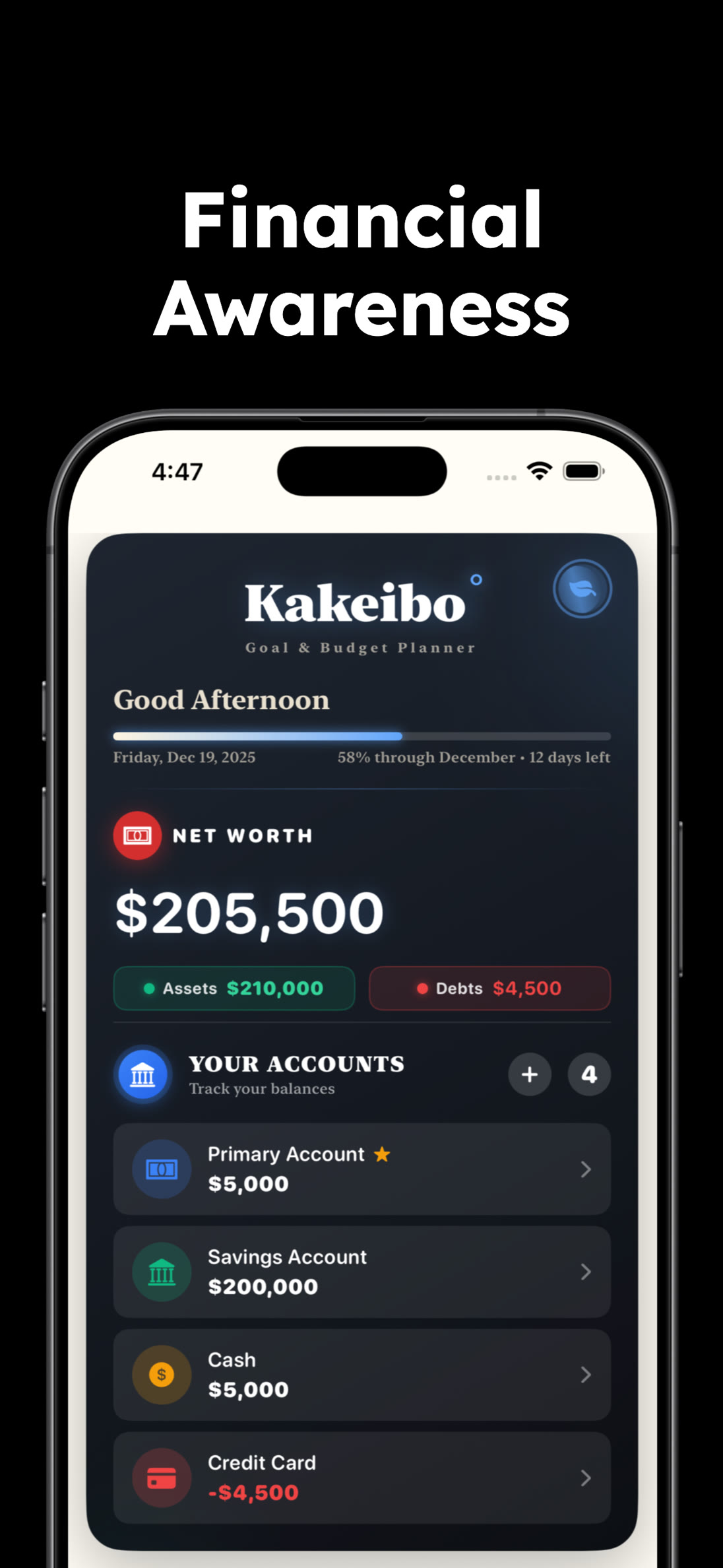
The Kakeibo difference: Instead of passively tracking transactions, you actively engage with every spending decision—creating awareness that leads to lasting change.
What Makes Kakeibo Different (The 2-Minute Explanation)
If you're new to Kakeibo, here's what you need to know:
Kakeibo (pronounced "kah-keh-boh") is a Japanese budgeting method created in 1904 by Japan's first female journalist, Hani Motoko.
At its core, it's built on four principles:
1. Manual Tracking
You write down every expense. The friction is intentional—it creates pause before purchases and reflection after.
2. Four Categories
Every expense goes into one of four buckets: Needs (Survival), Wants (Optional), Culture (Growth), or Unexpected (Extra).
3. Monthly Planning
At the start of each month, you set income, fixed expenses, savings goals, and category budgets.
4. Monthly Reflection
At the end of each month, you answer guided questions about your spending and plan improvements.
For a deeper dive into the Kakeibo method, check out our complete guide to Kakeibo budgeting.
The result? Studies and user reports show people using Kakeibo save 20-35% more than those using automated tracking apps.
Not because Kakeibo is complicated.
Because it's mindful.
Ready to Start Your Financial Reset?
The Kakeibo app makes Japanese budgeting simple on your iPhone. Set goals, track spending, reflect monthly—all with beautiful design and complete privacy.
Download Kakeibo Free →Your 5-Step New Year Financial Reset
Let's get practical. Here's exactly how to reset your finances for 2026 using Kakeibo.
Step 1: The 2025 Money Autopsy (30 minutes)
Before you can improve, you need to understand where you've been.
Pull up your bank statements from the last 3 months. Not the whole year—that's overwhelming. Just October, November, and December.
Answer these questions:
- What was your total spending each month?
- What percentage went to absolute necessities (rent, utilities, groceries)?
- What were your top 3 discretionary spending categories?
- Which purchases do you regret?
- Which purchases brought genuine joy or value?
Write this down. Be honest. No judgment—just observation.
Common discoveries:
- "I didn't realize subscriptions cost me £150/month"
- "Takeaway coffee is genuinely my biggest expense after rent"
- "Holiday spending was 3x what I intended"
This clarity is the foundation for everything that follows.
Step 2: Set Your 2026 Financial Intentions (20 minutes)
Notice I said "intentions," not "resolutions."
Resolutions are rigid demands. Intentions are guiding principles.
Use this framework:
The Kakeibo Intention Statement
"In 2026, I intend to save [specific amount] by reducing spending on [specific category] while protecting spending on [what matters to me]."
Examples:
- "In 2026, I intend to save £3,000 for an emergency fund by reducing spending on takeaway food while protecting my gym membership and book budget."
- "In 2026, I intend to save £5,000 for a house deposit by reducing subscriptions and impulse shopping while protecting travel experiences."
- "In 2026, I intend to pay off £2,400 in credit card debt by reducing entertainment spending while protecting family activities."
Notice what this does:
- Specific amount gives you a target
- Reduce category identifies what to change
- Protect category ensures sustainability
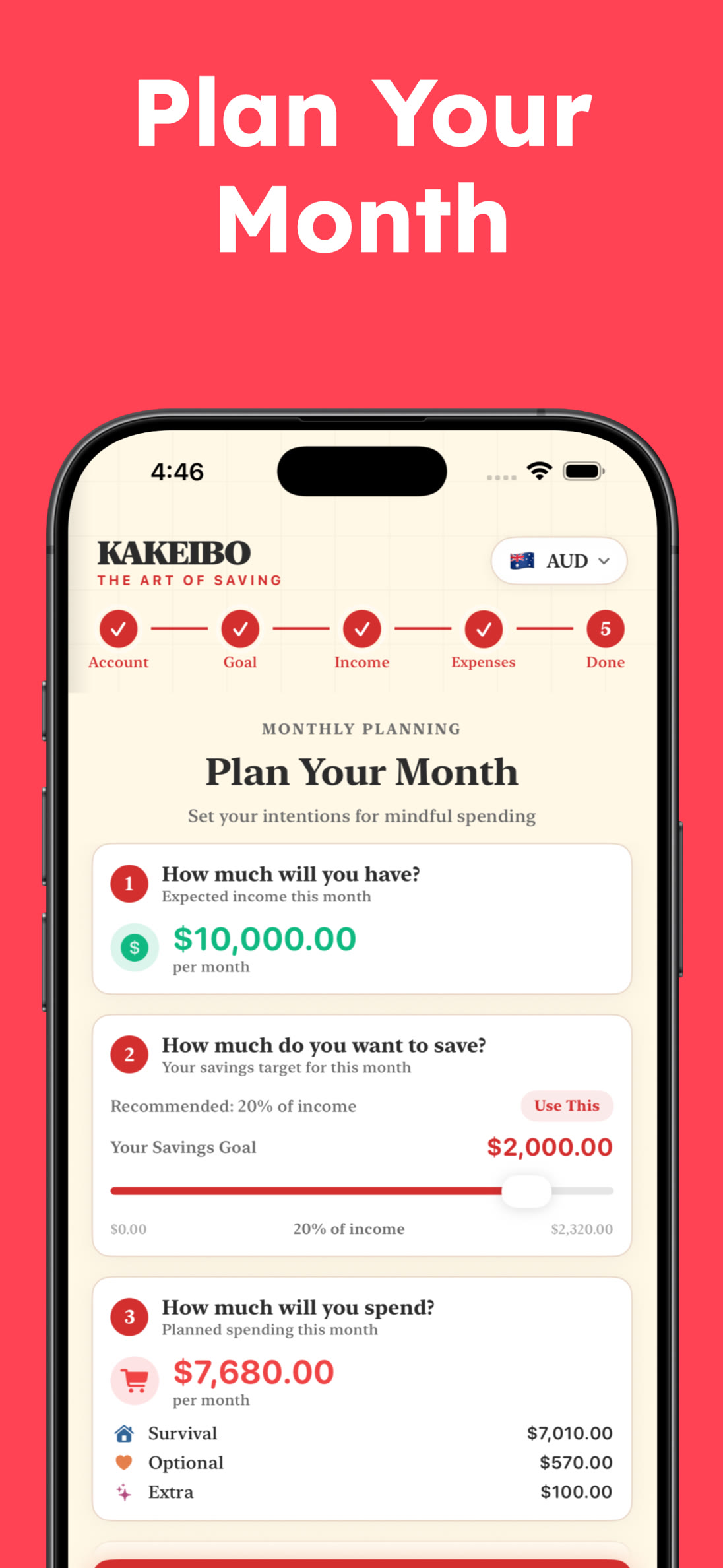
Monthly planning in Kakeibo: Each month starts fresh with clear income, fixed expenses, and savings goals—giving you a "safe to spend" amount for discretionary purchases.
Step 3: Set Up Your January Kakeibo Plan (15 minutes)
Now we translate intention into action.
Open the Kakeibo app and enter:
- Monthly Income: Your take-home pay for January
- Fixed Expenses: Rent/mortgage, utilities, insurance, debt minimums, subscriptions
- Savings Goal: What you want to set aside this month
The app automatically calculates your "Safe to Spend" amount—the money available for variable expenses across the four Kakeibo categories.
💡 January Reset Tip
Don't set an aggressive savings goal for January. Holiday spending often bleeds into the new year. Start with a realistic target (even 10% of income) and increase it as you build momentum.
Step 4: Begin Mindful Daily Tracking (Ongoing)
This is where the magic happens.
Every time you spend money, log it in the app with:
- Amount
- Category (Survival, Optional, Culture, or Extra)
- Brief note (optional but helpful)
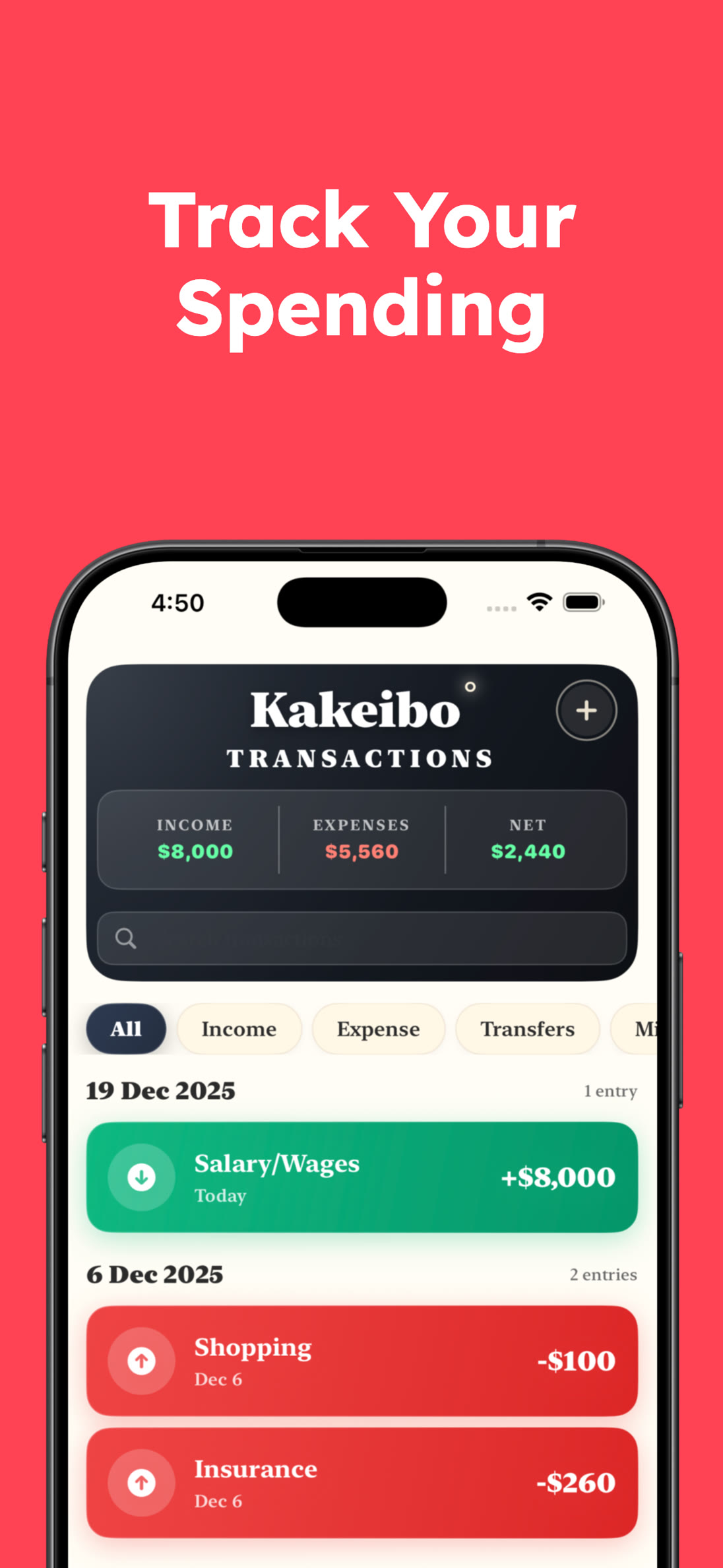
The 10-second habit: Log expenses immediately after purchase. The physical act of recording creates a moment of reflection that automated apps can never provide.
The Four Kakeibo Categories Explained:
| Category | Japanese Name | What Belongs Here |
|---|---|---|
| Survival | 生活費 (Seikatsuhi) | Groceries, transport, essential household items |
| Optional | 娯楽費 (Gorakuhi) | Dining out, entertainment, non-essential shopping |
| Culture | 教養費 (Kyōyōhi) | Books, courses, museum visits, personal growth |
| Extra | その他 (Sonota) | Gifts, medical expenses, unexpected costs |
Pro tip: The category you choose matters. Asking "Is this a need or a want?" before every purchase creates the mindfulness that changes behaviour.
Step 5: Complete Your First Monthly Reflection (20 minutes)
At the end of January, the real learning happens.
Kakeibo includes guided reflection questions like:
- How much did you save this month?
- Did you stick to your spending intentions?
- What purchases brought you joy?
- What purchases do you regret?
- What will you do differently next month?
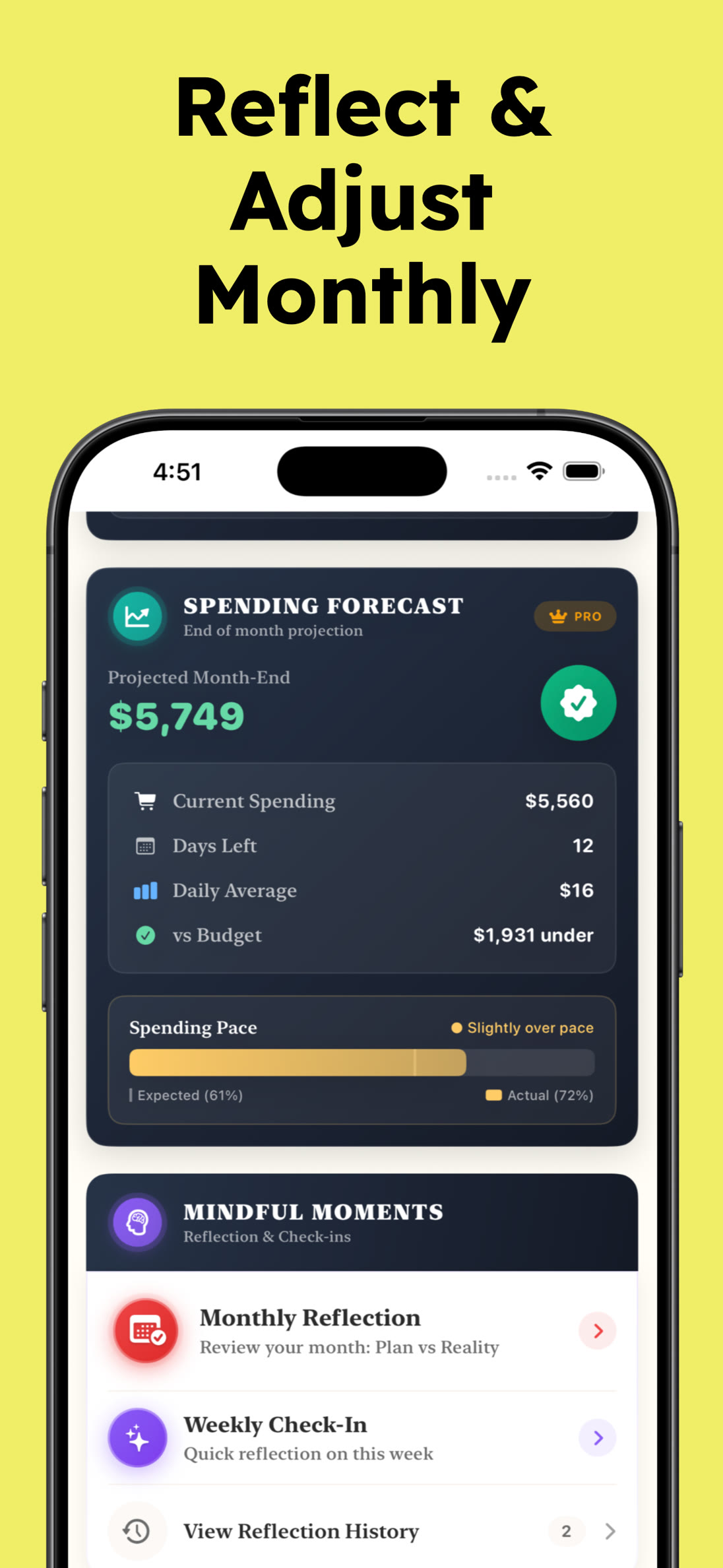
The reflection ritual: This isn't guilt-tripping yourself about overspending. It's curious observation that leads to insight and gradual improvement.
This monthly cycle—plan, track, reflect, improve—is what transforms temporary motivation into permanent change.
5 Common New Year Budgeting Mistakes (And How Kakeibo Prevents Them)
Mistake 1: Going Too Extreme Too Fast
The trap: Cutting all discretionary spending in January
Kakeibo solution: The Culture category explicitly protects spending on personal growth and enrichment. You're encouraged to spend on what matters—just mindfully.
Mistake 2: Not Tracking Small Purchases
The trap: Ignoring coffee, snacks, and micro-transactions
Kakeibo solution: Manual entry means nothing slips through. Those £3 coffees that "don't count" add up to £100/month become visible.
Mistake 3: Setting and Forgetting
The trap: Creating a budget in January and never looking at it again
Kakeibo solution: Daily tracking and monthly reflection build ongoing engagement into the system.
Mistake 4: No Emergency Buffer
The trap: Rigid budgets that break when unexpected expenses hit
Kakeibo solution: The "Extra" category acknowledges that unexpected costs are normal, not failures.
Mistake 5: Willpower Without Systems
The trap: Relying on motivation alone
Kakeibo solution: The structured process replaces willpower with habit. You don't need to feel motivated—you just follow the system.
What Real Results Look Like
Here's what Kakeibo users typically experience:
Average savings increase: 20-35% compared to pre-Kakeibo tracking.
That's not from deprivation. It's from awareness.
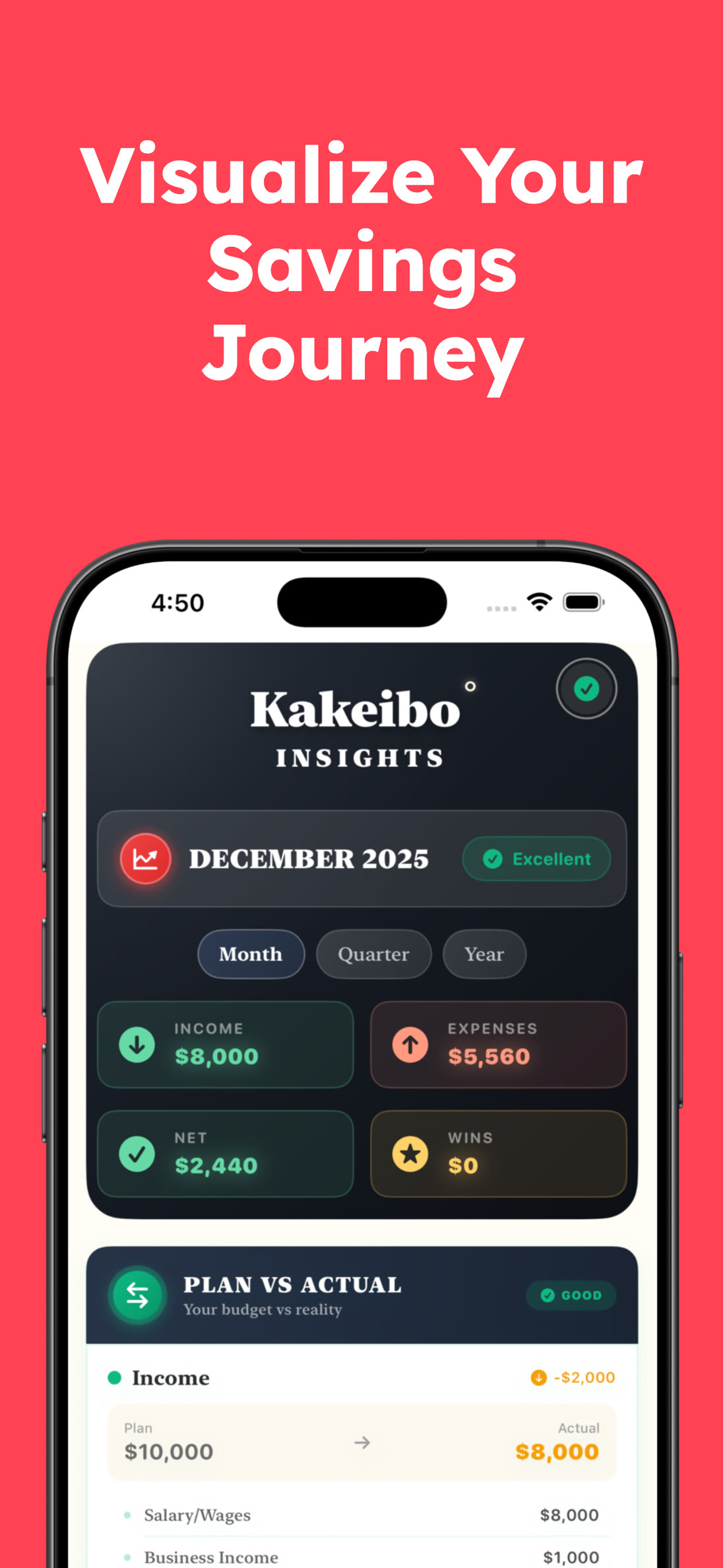
Visualize your progress: Watching your savings grow month over month creates positive reinforcement that keeps you motivated.
The January Kakeibo Challenge
Ready to commit? Here's a simple challenge:
🎯 30-Day Kakeibo Challenge
The commitment: Track every expense for 30 days. Complete your first monthly reflection on January 31st.
The goal: Identify your top 3 spending leaks and create one action item for February.
The reward: Financial clarity you've never had before—and probably £50-200 in discovered savings opportunities.
No massive lifestyle changes. No extreme restrictions. Just awareness.
That's all it takes to start.
Start Your 30-Day Kakeibo Challenge Today
Download the Kakeibo app and begin your financial reset. It's free to start, works offline, and never connects to your bank—your financial privacy stays intact.
Download Kakeibo for iOS →Frequently Asked Questions
Is it too late to start in mid-January?
Absolutely not. Mid-January is actually ideal—the post-holiday chaos has settled, and you can begin with a clear head. Kakeibo works on monthly cycles, so any day is a good day to start. Simply prorate your first month if needed.
Why manual tracking instead of automatic bank sync?
The manual entry is the key feature, not a limitation. The 10 seconds it takes to log each purchase creates a moment of mindfulness that automated apps can't replicate. This friction is what leads to 20-35% higher savings rates compared to set-and-forget automation.
What if I forget to log expenses?
It happens—especially in the first week. Keep your receipts and do a quick catch-up session at the end of each day. Most users find that after 2-3 weeks, logging becomes automatic. The app also shows your recent entries to help you remember.
How do I handle shared expenses with a partner?
Log your portion of shared expenses in the appropriate category. Many couples use Kakeibo individually for personal spending while maintaining a separate joint system for household expenses. The key is tracking what you control.
Is the Kakeibo app free?
The core Kakeibo experience is free, including expense tracking, the four categories, and monthly planning. Premium features like unlimited history, advanced analytics, and iCloud sync across devices are available with optional subscriptions.
What currencies does Kakeibo support?
Kakeibo supports 70+ currencies with auto-detection based on your device settings. Whether you're in the UK, US, Japan, Europe, or elsewhere, the app adapts to your local currency.
Your 2026 Starts Now
Here's the truth about financial fresh starts:
They don't happen because of a date on the calendar.
They happen because of a decision—followed by action—followed by systems that make success inevitable.
Kakeibo isn't magic. It's a 120-year-old method that works because it addresses the real reason we struggle with money:
We spend mindlessly.
Kakeibo replaces mindlessness with mindfulness.
Automation with intention.
Wishful resolutions with structured reflection.
This year doesn't have to be like last year.
This month doesn't have to end in regret.
This week—today—you can begin a different relationship with money.
The question isn't whether Kakeibo works.
The question is: are you ready to try something that actually changes behaviour?
Make 2026 the Year You Finally Get Your Finances Right
Join thousands of people using Kakeibo to build lasting financial wellness. Download free, start today, and experience what mindful budgeting can do.